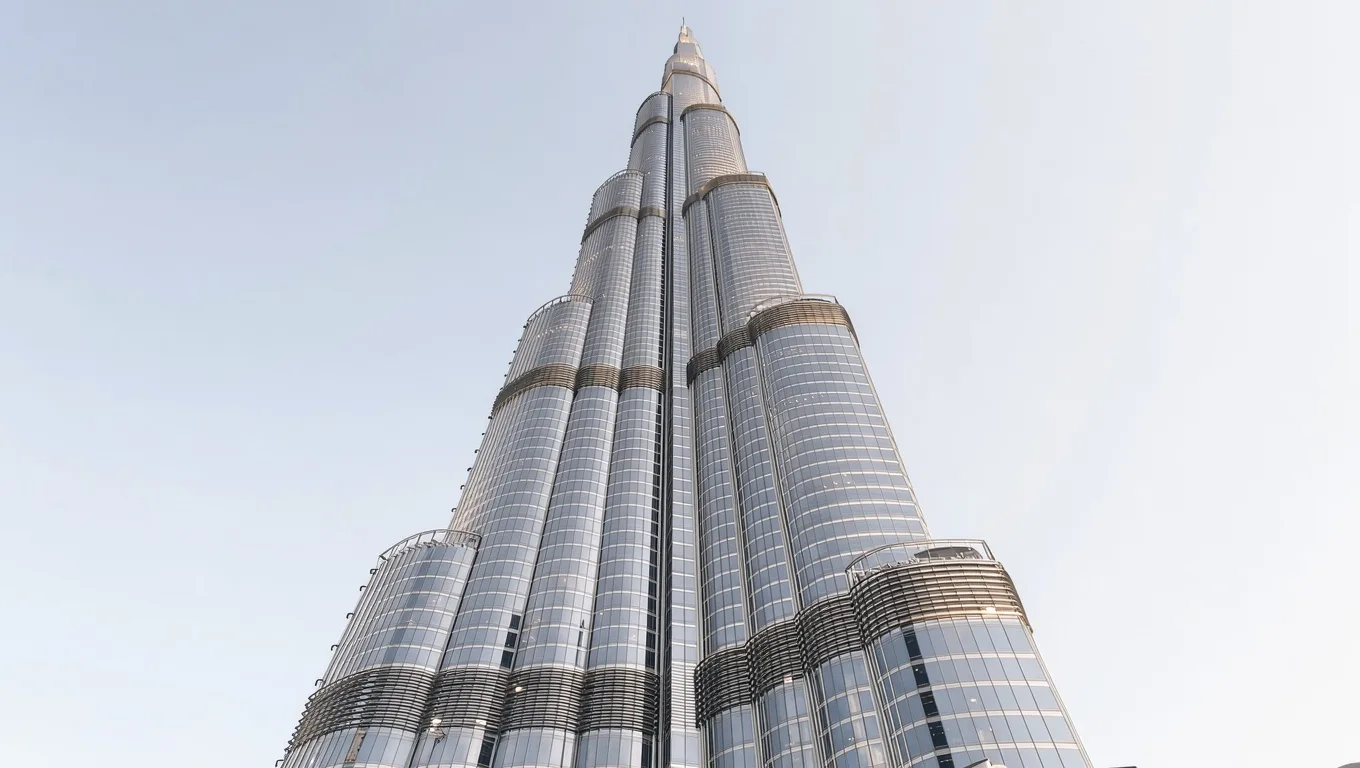
Burj Khalifa: which deck, which slot, and what it actually costs
The world's tallest building is also the easiest place in Dubai to waste money. Two observation decks, a dozen resellers, and a sunset slot that sells out weeks ahead — here is how to choose well.
Last updated November 2026
You will see the Burj Khalifa from almost everywhere in Dubai before you go up it. It sits at the end of Sheikh Zayed Road like a needle, visible from the Marina, from the creekside in Deira, from the window of your plane. That familiarity is exactly why so many visitors skip the ticket — and also why the ones who do go up are surprised by how much the city changes from 400 metres.
This guide covers the decision that actually matters: which deck, and which time of day. Everything else — the queues, the gift shop, the lift that makes your ears pop — is predictable and easy to plan around.
What the Burj Khalifa is — and is not
A mixed-use tower, not a theme park. There is no café at the top, no outdoor terrace on the main deck, and no linger-as-long-as-you-like experience below the SKY level.
| Detail | What to know |
|---|---|
| Height | 828 m, 163 usable floors — the tallest structure in the world since 2010 |
| Designed by | Adrian Smith at Skidmore, Owings & Merrill; the Y-shaped plan is derived from the desert hymenocallis flower |
| Main deck | At the Top — levels 124 and 125, around 452 m, indoor observation with a small open-air terrace on 124 |
| Premium deck | At the Top SKY — level 148, around 555 m, the world's highest observation deck with a lounge |
| Lift | One of the fastest in the world; the ride to level 124 takes roughly a minute |
| Entry | Via the lower ground floor of Dubai Mall, through a dedicated entrance — not the mall's main doors |
| Time needed | 90 minutes for the main deck, two hours for SKY including the lounge |
Two things surprise first-timers. First, the observation deck is indoor and air-conditioned behind full-height glass; there is a narrow open-air section but you cannot walk around the outside of the tower. Second, the tower itself is only part of the visit — the Dubai Fountain, the mall and the Downtown promenade sit at its feet, and plenty of people spend an afternoon there without buying a ticket at all.
At the Top vs At the Top SKY
Roughly a hundred metres and a large price gap separate the two. Which one you buy depends on what you want out of the view.
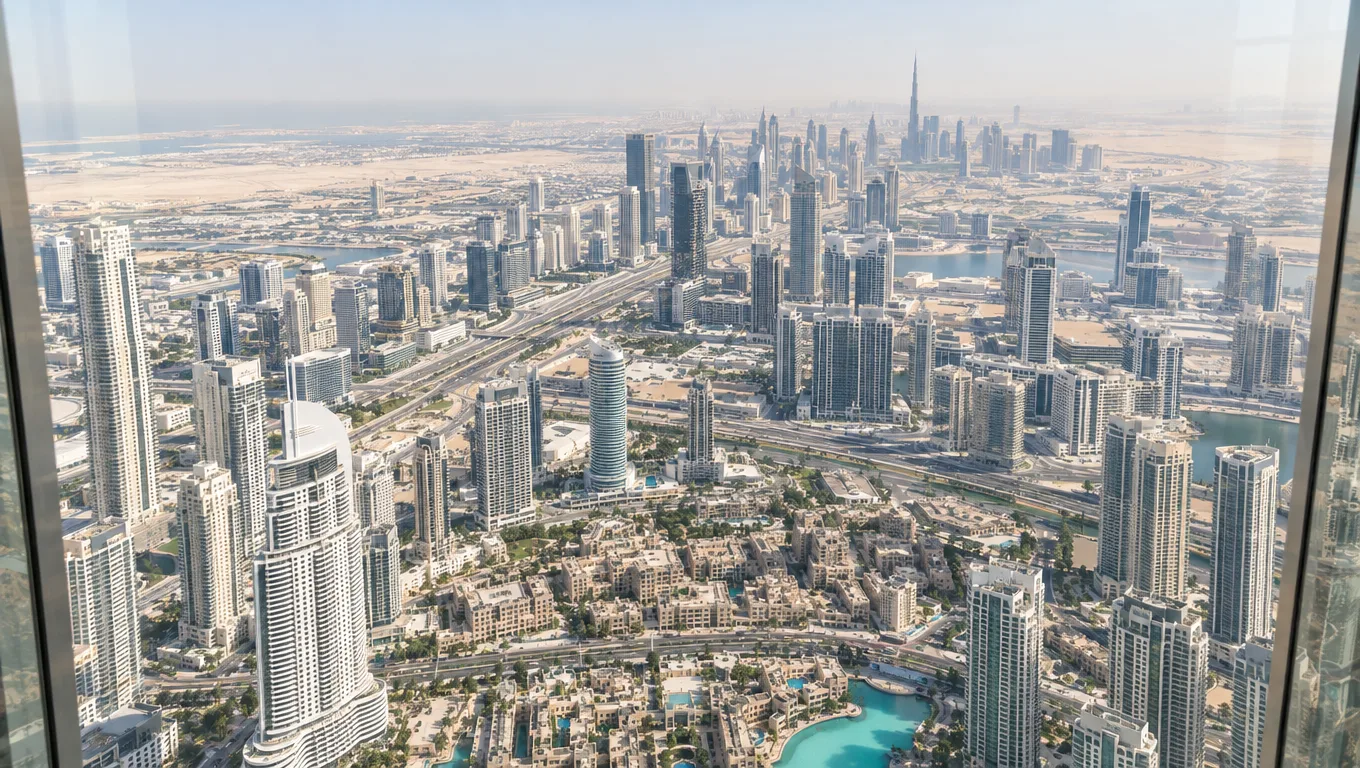
At the Top — levels 124 and 125
This is the deck in every postcard. A 360-degree glass-walled gallery with floor-to-ceiling windows, a section of open-air terrace, and a small exhibition on the tower's construction on the way through.
The view is genuinely excellent: you look down on the Downtown cluster, which is the effect most people are hoping for. On a clear day you can pick out the Palm, the Creek, the Marina towers and, in the far haze, the Hajar Mountains.
Who it suits: almost everyone. Families, anyone with a tight schedule, and anyone who wants the classic photo without paying for the upgrade.
At the Top SKY — level 148
An extra lift ride above 555 m to a smaller, quieter lounge with a guided introduction, a seating area and soft drinks included. Fewer people per slot, which matters more than the height.
What you gain is context, not drama. From 555 m the city flattens into a diagram — you see the shape of Dubai's road grid and the desert edge in a way you cannot from 452 m. What you lose is any sense of scale, because everything below is too small to read.
Who it suits: repeat visitors, aviation and engineering enthusiasts, and anyone who values a calm room over the buzz of a busy deck.
| At the Top (124–125) | At the Top SKY (148) | |
|---|---|---|
| Height | ~452 m | ~555 m |
| Typical adult price | From around AED 179 off-peak; higher for sunset slots | From around AED 399; higher at sunset |
| Crowd | Busy, especially 17:00–19:00 | Smaller, timed, seated |
| Refreshments | Paid kiosk | Soft drinks included |
| Open-air section | Yes, a small terrace on 124 | Indoor lounge only |
| Best for | First visit, families, photography | Repeat visitors, quiet viewing |
Prices are indicative bands to help you budget, not quotations. Rates vary by date, slot and season, and change often — always confirm the current price and what is included on the official operator site before you pay.
Our recommendation
If this is your first time in Dubai, buy At the Top and spend the money you save on a good dinner in Downtown. The difference between 452 m and 555 m is far smaller than the difference between a hazy day and a clear one — and no ticket upgrade fixes haze.
How to book without overpaying
Tickets are timed and capacity-controlled. Almost every problem people have with this attraction comes from booking late, booking through a reseller, or booking the wrong slot.
Book direct, or book through your airline
The attraction is operated by Emaar, and the authoritative source for current prices, opening hours and availability is the official Burj Khalifa site. Third-party platforms are legitimate and sometimes offer bundles, but you are paying a margin for the same timed entry. If a deal looks far below the official price, check what it actually includes — often it is a "flexible" ticket that still requires you to queue for a specific slot on the day.
Understand prime vs non-prime slots
Tickets are priced by time band. The bands that catch the sunset — roughly 16:30 to 19:00 depending on the season — are the most expensive and the first to sell out, often a week or more ahead in the November–March high season. Mid-morning and early afternoon slots are cheaper and, on a clear day, arguably better for photography because the sun is behind you rather than in the glass.
The haze problem nobody mentions
Dubai sits in a dusty coastal basin. On many days there is a visible haze layer that turns the horizon grey by mid-afternoon and flattens the view entirely. Sunset slots sell on the promise of golden light; the reality is often a bright disc disappearing into milk. The clearest views in our experience come in the first two hours after opening in winter, and immediately after a shamal wind has blown the dust out of the city. If visibility matters more to you than the sunset photo, book a morning slot in December, January or February.
Arrive early, not on time
Your ticket gives you a time for the lift, but you still clear a security screening, a bag check and a short exhibition walk before you reach it. Build in 20–30 minutes for the entry process at busy periods. Late arrivals can be moved to a later slot, but on a sold-out day that is not guaranteed.
What not to bring
- Tripods and large camera bags — professional equipment may be refused or need clearance.
- Food and drink — sealed water is usually fine, picnics are not.
- Anything you would not take through airport security — the screening is comparable.
Dress for the mall, not the beach
You enter through Dubai Mall, where shoulders and knees are expected to be covered for everyone. Beachwear, very short shorts and strappy tops will get you uncomfortable looks and, at some entrances, a polite request to cover up. This is covered in more detail in our dress code and etiquette guide.
What you are actually looking at
The deck is circular, so work your way around rather than standing where you came out of the lift.
North — Downtown and the coast
The dense cluster of towers immediately below, the Dubai Mall roof and the artificial lake. Beyond it the coastline curves toward Jumeirah and the Palm, with the Burj Al Arab a small sail on the horizon.
South — Sheikh Zayed Road
A single straight ribbon of highway running to the horizon, with the metro line alongside it. On a clear day this is the most legible view of how Dubai is structured: one spine, everything hung off it.
East — the Creek and the old city
Deira and Bur Dubai look like a different city entirely from up here — low-rise, dense and brown, the dhows still moored along the water. Worth finding before you go down, so you can picture it when you walk the souks.
West — the desert
Usually the haziest direction. On a good winter morning you get the sand edge of the city and the dune fields beyond, which is a reminder of how recently all of this was empty.
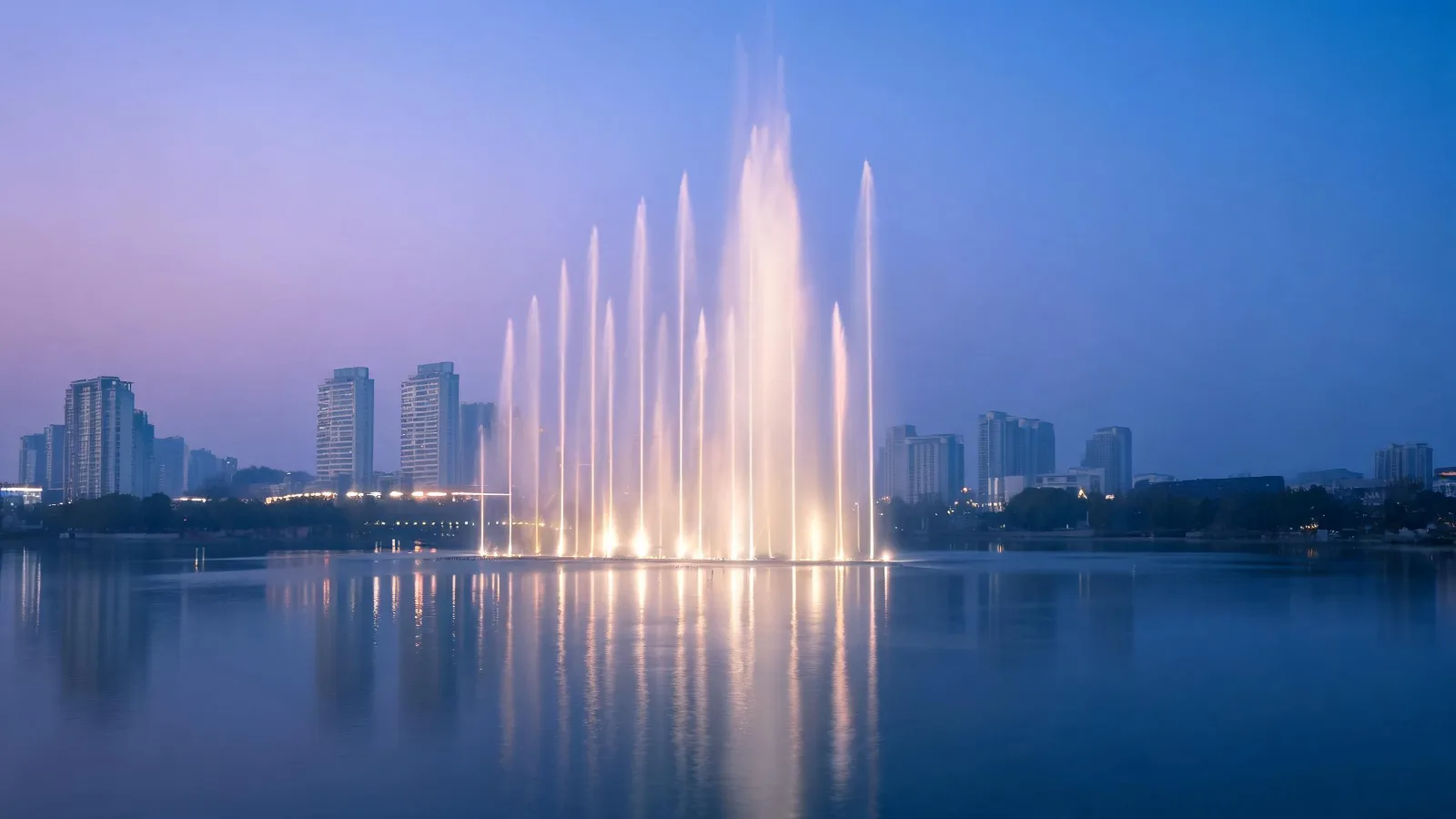
The Dubai Fountain
At the base of the tower, the choreographed fountain show runs in the evening at short intervals — each performance lasts a few minutes and costs nothing. It is genuinely one of the best free things in Dubai, and for a lot of visitors it is the more memorable half of the evening.
Stand on the Souk Al Bahar side of the lake rather than the mall side: the crowd is thinner, you get the tower behind the water, and you are first out when it ends. Arrive ten minutes before a show rather than sprinting as it starts.
The fountain has been through renovation and its schedule has changed more than once in recent years. Check the current show times on the day rather than trusting a blog post — including this one. Evening shows are the ones worth planning around.
Cheapest upgrade in Dubai
For a few dirhams you can watch the show from a small boat on the lake instead of the shore. It is not a luxury experience and the boat is basic, but you get the water at eye level and the tower filling the frame.
Making an afternoon of Downtown
The tower is the anchor of a district that is easy to walk and easy to overpay in. Here is the version that works.
- Dubai Mall — the aquarium tunnel, the ice rink and the waterfall are all inside and all free to look at. The mall is genuinely a sight, not just a shopping centre.
- Souk Al Bahar — the low-rise arcade on the far side of the lake, with a bridge to the mall. Better cafés, fewer crowds, and the best angle on the tower.
- Burj Park — the lawn on the island in the lake. Bring a picnic, sit on the grass, watch the tower change colour as the light goes.
- The promenade — a loop around the lake that takes about twenty minutes and passes the fountain, the towers and the best free viewpoints in the city.
One caution: restaurants inside the mall and directly on the lake charge a prime-location premium for fairly ordinary food. Walk ten minutes toward Business Bay or back along Sheikh Zayed Road and the same money buys a much better meal. Our budget guide has specific numbers.
Things worth knowing before you go
Getting there
Burj Khalifa / Dubai Mall station on the Red Line opens almost onto the mall's link bridge. From the station it is a 10–15 minute indoor walk to the attraction entrance, which is a mercy in summer. Taxis drop at the mall's various entrances; the Fashion Avenue entrance is closest to the tower.
Accessibility
The observation decks are fully accessible, with step-free routes, lifts and accessible toilets. Wheelchairs can be borrowed at the entrance. Tell staff at booking if you need extra time through security — the queue area is the only awkward part of the journey.
Best months for a view worth paying for
December to February gives the clearest air and the most comfortable temperatures. March and November are usually still good. Between June and September, afternoon heat haze routinely ruins the view and the outdoor terrace becomes unusable — if you visit in summer, go at opening time. Our month-by-month climate guide explains why.
Respect and behaviour on the deck
The deck is a shared space with families and children. Keep voices down, do not hold a spot at the glass for a long photo shoot, and do not photograph other visitors' faces without asking. Modest dress applies here as it does in the mall below.
Burj Khalifa questions
Is the Burj Khalifa worth it?
For a first visit to Dubai, yes — the view explains the city in a way nothing else does, and the tower is the one landmark that genuinely lives up to its billing. If you are on a tight budget or short on time, the fountain, the lake promenade and the mall give you most of the atmosphere for free.
Should I choose At the Top or At the Top SKY?
Choose At the Top for a first visit. The 452 m deck gives you the classic downward view of the skyline and costs roughly half as much. SKY at 555 m is quieter and includes a lounge with drinks, which suits repeat visitors or anyone who dislikes crowds — but the extra height does not transform the view.
What is the best time of day to visit?
First thing in the morning in winter, when the air is clearest and the queues are short. Sunset slots are the most popular and the most expensive, but Dubai's afternoon haze often turns the horizon grey — check the visibility before paying a premium for golden hour.
How long should I allow?
Around 90 minutes for At the Top including security, the exhibition and time on the deck. Two hours for SKY. Add 20–30 minutes if you are visiting at a peak slot on a weekend or during school holidays.
Can I buy tickets on the day?
Sometimes, but do not rely on it. Sunset and evening slots sell out well ahead in high season, and walk-up availability is the first thing to disappear. Book a day or two in advance at minimum, and further ahead for December, January and holiday weekends.
Is the Burj Khalifa accessible for wheelchairs and prams?
Yes. The route from Dubai Mall through security to the lift is step-free, with accessible toilets on the decks. Prams are allowed but must be folded for the lift at busy times. Ask staff at the entrance if you need more time.
Can I go up the Burj Khalifa for free?
No — the observation decks are ticketed and there is no free public access above the ground-floor areas. You can, however, see the tower, walk the lake promenade and watch the fountain show without spending anything.
Build the rest of the day around it
A one, three and five-day plan that fits the tower in without wasting an afternoon on queues.