Desert safari: how to choose one that is actually good
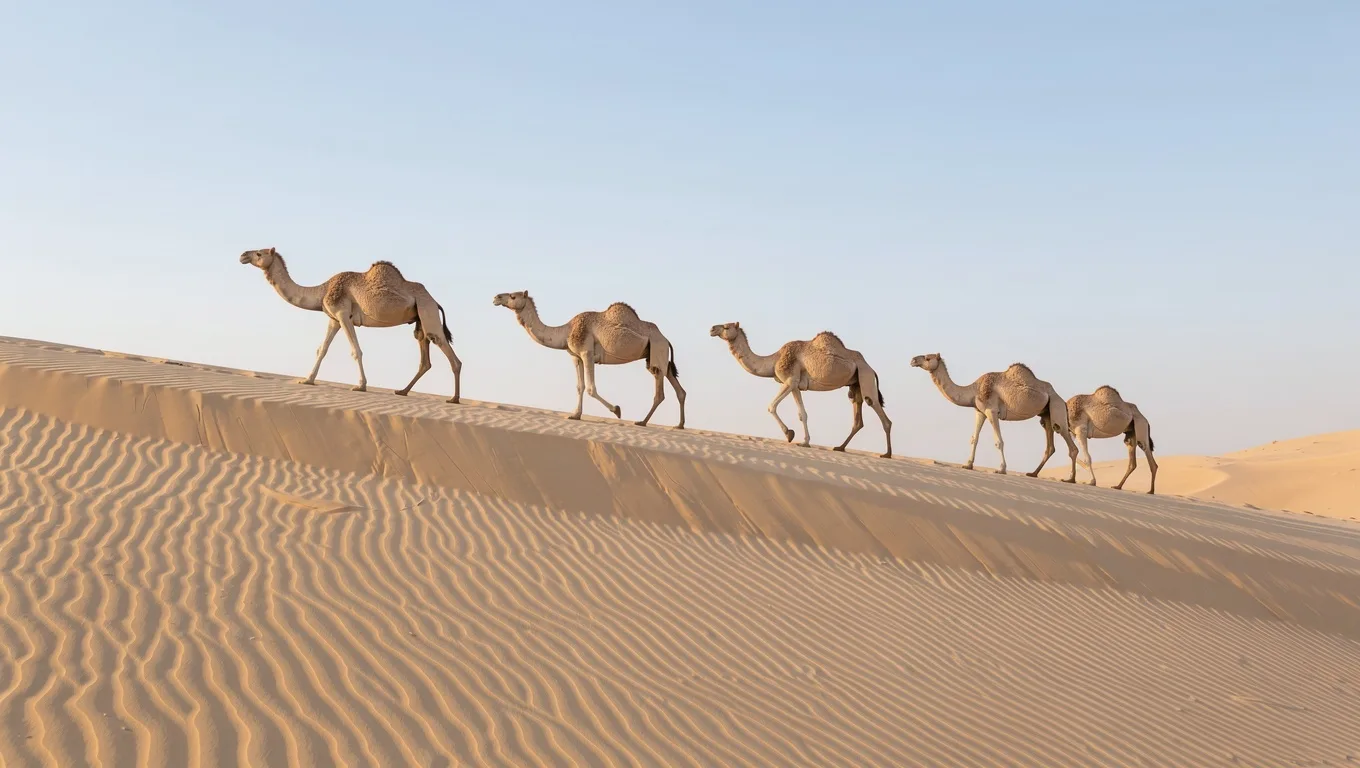
Twenty minutes outside the city the towers stop and the sand starts. The difference between a brilliant desert afternoon and a miserable one is almost entirely down to which operator you book.
Last updated November 2026
The desert is the reason Dubai exists, and yet it is the part of the trip most visitors experience in the most packaged way possible: collected from a hotel lobby at 15:00, driven to a purpose-built camp, fed, entertained, and returned by 21:30. That can be a great evening. It can also be four hours of queuing for a camel ride in a car park of minibuses.
What follows is the honest version — the formats, the real costs, the questions that separate a good operator from a bad one, and the parts of the standard itinerary you are allowed to skip.
Four ways to see the desert
They are not variations on a theme — they are different trips. Pick by what you actually want from the sand.
| Format | Duration | Indicative price | Best for |
|---|---|---|---|
| Morning dune drive | 3–4 hours, leaves ~08:00 | From around AED 150–250 per person | Cooler air, better light, no camp theatrics, back for lunch |
| Evening safari | 6–7 hours, leaves ~15:00 | From around AED 200–400 per person | The classic — dune bashing, sunset, dinner and a show |
| Overnight desert camp | ~20 hours | From around AED 500–1,500 per person | Stars, silence, sunrise — the only way to feel the scale |
| Self-drive / private 4×4 | Flexible, half or full day | From around AED 800–1,800 per vehicle | Families, photographers, anyone who wants to control the pace |
Prices are indicative bands for planning, not quotations. Rates depend on the reserve, group size, inclusions and season, and they change. Confirm what is included before you book.
Why the morning trip is underrated
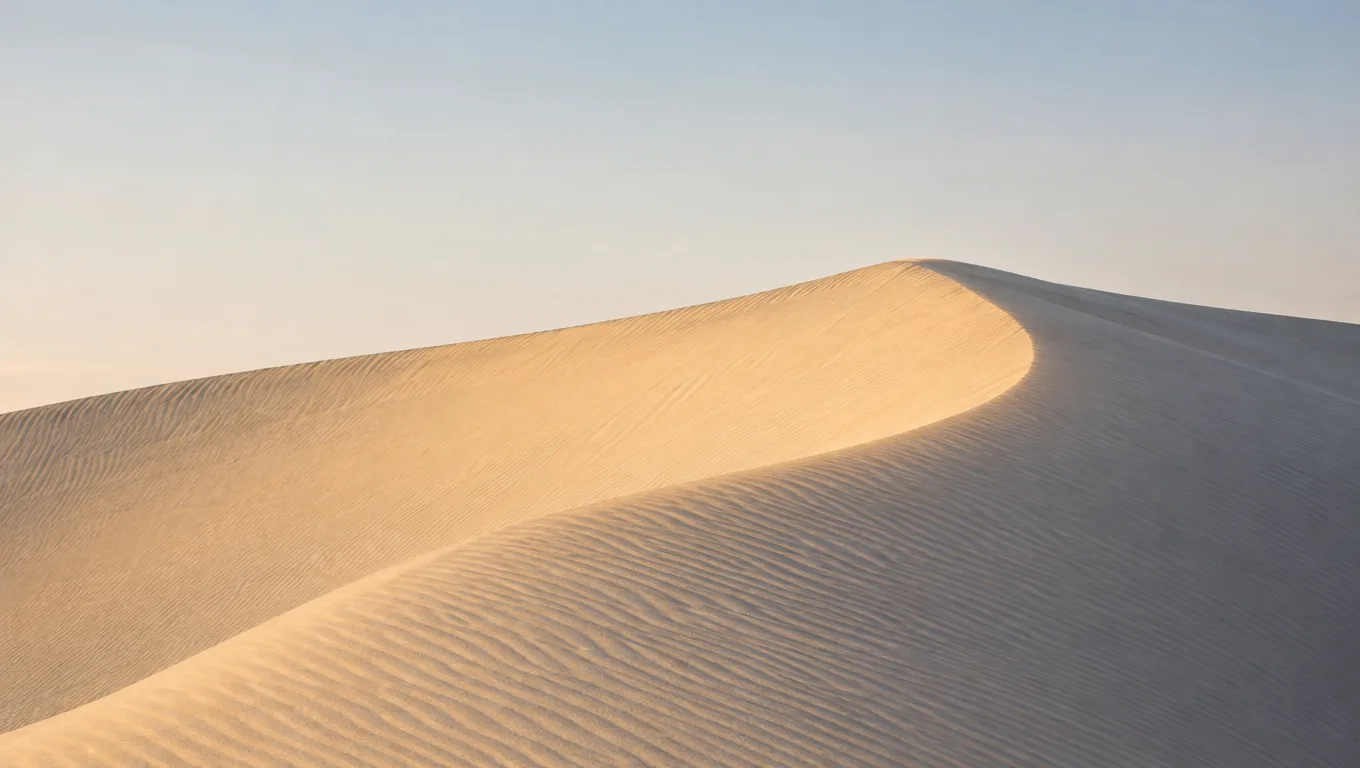
Everyone books the evening. That means the evening is where the crowds, the queues and the hard sell live. The morning drive leaves at a civilized hour, runs in cool air, gives you long shadows and no other vehicles on the ridge, and returns you to the city in time for a late lunch and a pool afternoon.
You give up the dinner and the show. If neither of those appeals — and for a lot of people they do not — the morning is the better trip at a lower price.
Why the overnight is worth the money
The desert at 02:00, with no camp music and no light except what you brought, is a genuinely different place. An overnight stay is the only format that lets you see it. Choose a camp with a small number of tents and a real location — a bubble tent in a compound beside a highway is not the same experience.
What dune bashing actually involves
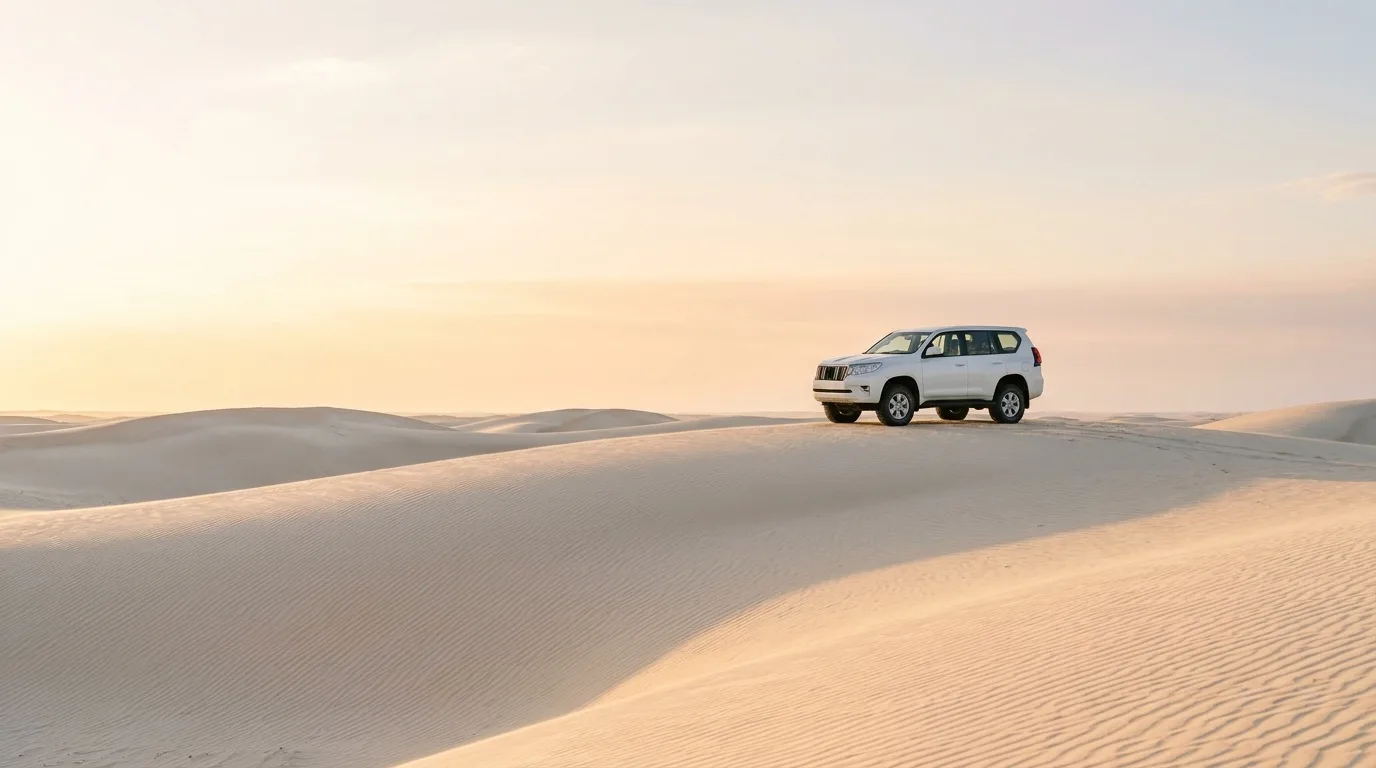
Dune bashing is driving a 4×4 up and over sand dunes at speed. It is the headline activity and it is not for everyone.
What it feels like
Twenty to forty minutes of rolling, tilting and dropping over ridges, driven by someone who does it every day. It is closer to a gentle rollercoaster than to off-roading: the vehicle is air-conditioned, you are strapped in, and the sand absorbs almost everything.
Who should skip it
- Anyone pregnant, or with back, neck or heart conditions — no exceptions and no operator should push you.
- Young children. Most operators will not allow children under a certain age in the bashing vehicle; confirm the policy before booking rather than at the pickup.
- Anyone prone to motion sickness. The swaying is continuous, not a single jolt.
You can decline and still go
Good operators will let you skip the bashing and meet the group at the camp, or take a slower route across the sand. Ask when you book — if the answer is that the itinerary is fixed, that tells you something about the company.
Motion sickness, practically
Take medication an hour before pickup, not in the vehicle. Sit in the front passenger seat if you can — the back rows swing the most. Eat something light beforehand; an empty stomach makes it worse, a heavy lunch makes it much worse.
Between the dunes and the show
The second half of an evening safari happens at a desert camp — a walled compound of tents, a buffet, a stage and a lot of other tourists.
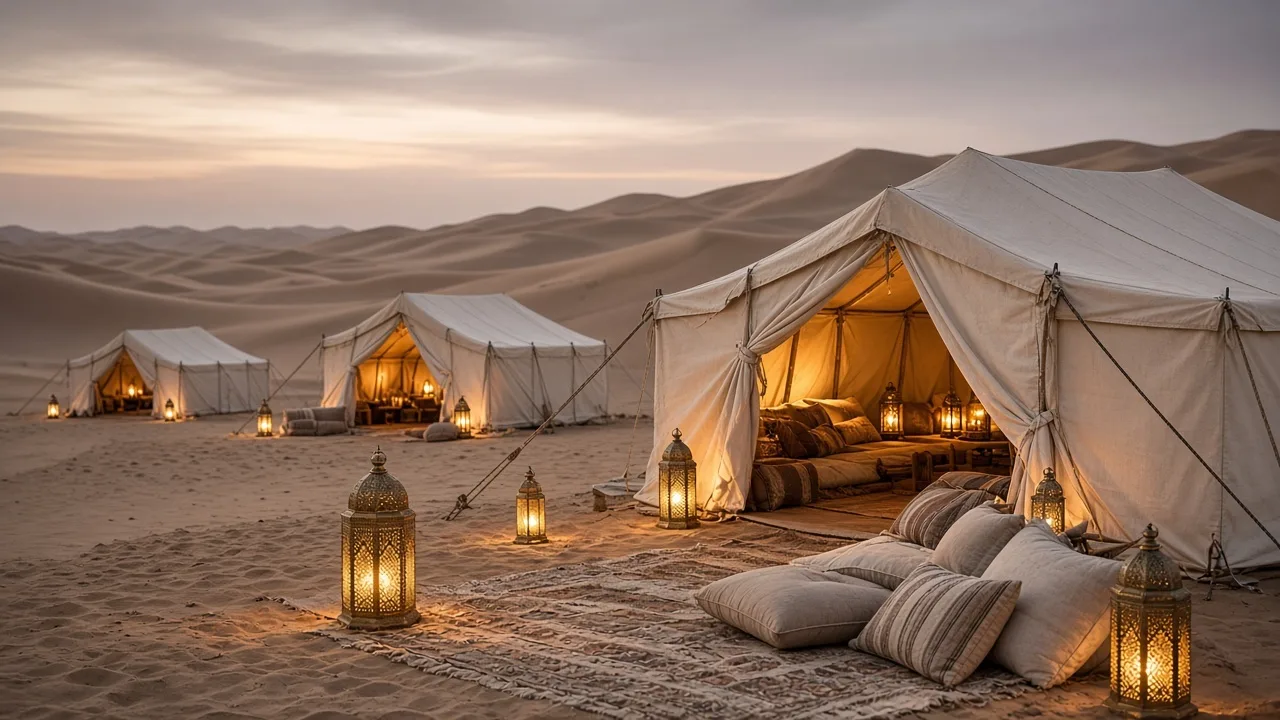
Camps vary more than any other part of the trip. At the bottom end you get a large compound with plastic chairs, a queue for the camel, a buffet that is fine but unremarkable, and amplified music. At the top end you get a smaller camp set deeper in the reserve, proper seating, decent food and a quieter atmosphere.
What a decent camp includes
- Henna painting — usually a small free design on the hand, done by a resident artist
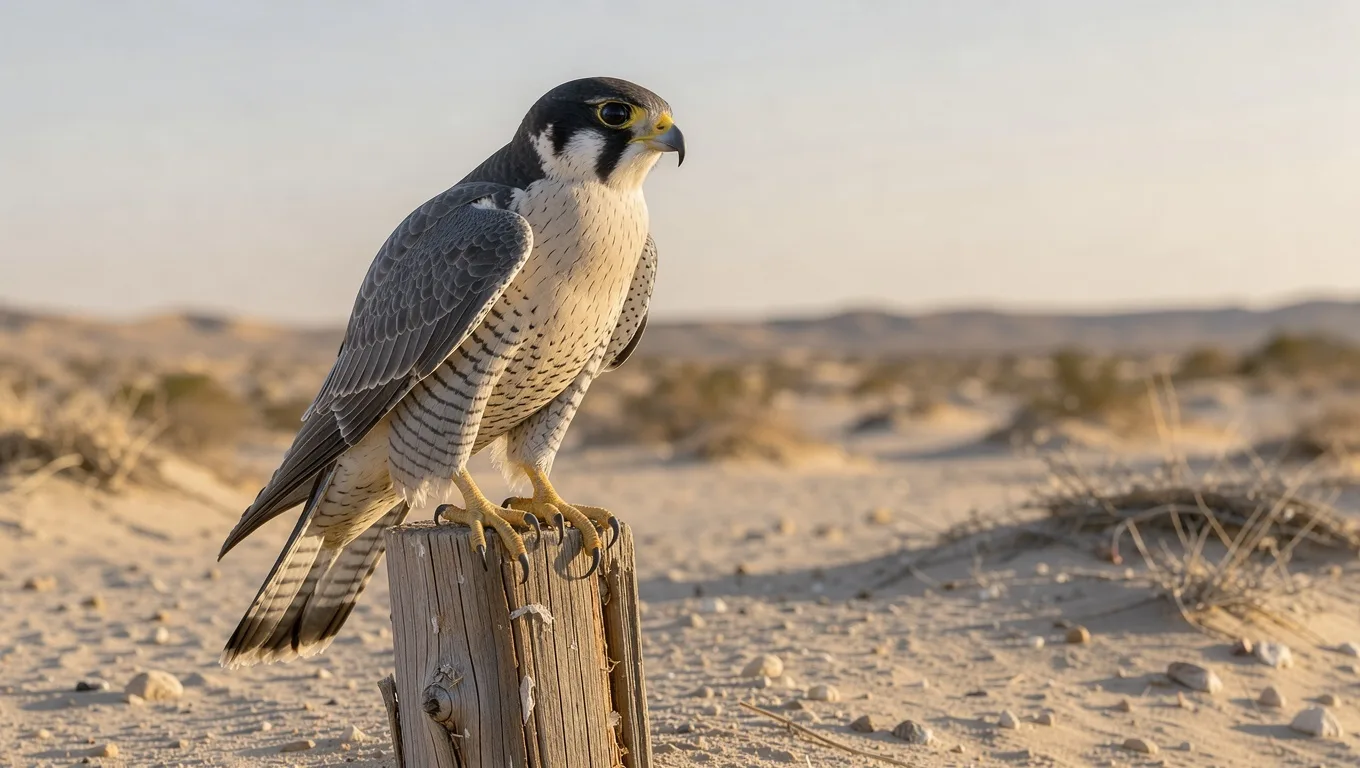
- Falconry — a short display, often with a peregrine or a saker falcon, and the best photography of the evening
- Camel ride — a short loop; if there is a long queue, walking beside the camels is often more pleasant
- Arabic coffee and dates on arrival — the traditional welcome, and genuinely the nicest thing on offer
- Buffet dinner — usually grilled meat, rice, salads and a dessert; vegetarian options are normal, dietary needs are not always
- Entertainment — typically a tanoura (whirling) dance and a fire show
- Shisha — sometimes included, sometimes extra
What is usually an extra charge
Quad bikes, sandboarding, horse riding, henna beyond a small design, and any alcohol. Alcohol is only available at camps with a licence, and it is not something to assume — if having a beer with dinner matters to you, ask specifically.
Photography in the desert
Do not photograph people's faces without asking, and never photograph Emirati women. Falconry displays and camel handlers are usually happy to be photographed if you ask first, and a small tip is appreciated. Ask before photographing inside a private tent.
Questions that separate good operators from bad
Ask these before you pay. The answers are more informative than any brochure.
1. Which reserve do you drive in?
Dubai has several protected desert areas with different characters. Some operators drive in areas set aside for recreational dune driving; others use conservation reserves where wildlife — oryx, gazelle, desert foxes — is protected and driving is restricted to defined tracks. Reputable companies are specific about where they go.
2. How many people per vehicle?
A private 4×4 seats up to six passengers comfortably. Some operators fill seven into a vehicle designed for five, which makes the middle seats miserable for an hour. Ask the maximum, not the average.
3. Do you hold a licence, and what is the vehicle safety record?
Dune driving is regulated and reputable operators employ licensed drivers with proper insurance. This is not a question to be shy about — a company that cannot answer it clearly is a company to avoid.
4. What is the animal-welfare policy?
Camels should be working short shifts with rest and water, not standing in a queue in full sun for six hours. Ask how many camels the camp keeps and how rides are rotated. If a camp offers unlimited rides all evening, that is a warning, not a bargain.
5. Is the pickup time honest?
"15:00 pickup" often means a driver collecting six hotels and reaching the dunes at 17:00. Ask whether the transfer is shared and how many stops it makes. A private transfer costs more and saves an hour of your evening.
Signs of a good safari
- Specific about the reserve it uses
- Clear maximum passengers per vehicle
- Small camp, limited numbers
- Willing to let you skip dune bashing
- Answered safety questions in writing
Warning signs
- "Free" quad bike or falcon photo as the headline
- Price far below every competitor
- No address, no licence number, no reviews
- Insists the itinerary cannot be adjusted
- Pushes an upgrade at the pickup point
What to wear and bring
Desert evenings are cooler than the city and much cooler than the beach. In winter, bring a light layer — the temperature drops quickly once the sun is gone, and a camp at 21:00 in January can be genuinely cold.
- Closed shoes — sand gets everywhere, and flip-flops are hopeless on a dune
- Loose trousers or long shorts — modest dress applies, and you will be sitting on the ground
- A scarf or light wrap — useful for wind-blown sand and for warmth after dark
- Sunglasses and a hat for the morning trip
- Cash in small notes for tips and extras; card machines at camps are unreliable
- A power bank — cold nights drain phone batteries and everyone photographs the stars
Leave the tripod at the hotel unless you have booked a private trip with photography explicitly agreed in advance.
When to go
October to April is the safari season. Between June and September the daytime desert is dangerously hot and most operators move to short early-morning or late-evening trips — or stop entirely. If you are visiting in summer, an overnight camp is the only format that is genuinely comfortable, and even then you want air-conditioning in the tent. Our month-by-month guide has the temperature detail.
Ramadan
During Ramadan, some camps adjust their programmes — live music and dancing may be reduced or dropped, and alcohol service is restricted. Many operators still run safaris, but the atmosphere is different. Ask what changes before booking, and read our etiquette guide for the wider context.
Children and families
Most operators welcome children but apply age limits to dune bashing. For younger families, a private 4×4 with a gentle route and an early return usually works better than a shared coach trip. We cover the wider family logistics in Dubai with kids.
Desert safari questions
Is a desert safari worth it in Dubai?
Yes, if you pick the right format. Seeing the desert is the counterweight to the skyscrapers and it is the only part of the trip that shows you what the country looked like before oil. Choose a smaller camp, ask the operator questions, and consider the morning trip if crowds bother you.
How much does a desert safari cost?
Shared evening safaris generally start around AED 200–400 per person including transfers, dinner and entertainment. Morning dune drives are usually cheaper. Overnight camps start around AED 500 and run well past AED 1,500 for a proper small camp. Private vehicle hire is priced per 4×4, typically AED 800–1,800. Always confirm what is included.
Is dune bashing safe?
With a licensed driver and a properly maintained vehicle, it is a regulated activity with a good safety record. The risks come from unlicensed operators, overcrowded vehicles and drivers who push too hard for tips. Ask about licensing and insurance, and do not do it if you are pregnant or have back, neck or heart conditions.
Should I book the safari before I arrive or in Dubai?
Book at least a few days ahead in high season, particularly for overnight camps and small-group trips, which have limited capacity. In low season you can often book a day or two out. Booking through your hotel concierge costs more but gives you someone to complain to if the trip is not as described.
Can I do a desert safari with children?
Yes, but choose carefully. Most operators set a minimum age for dune bashing, and shared coach trips involve a lot of waiting. A private 4×4 with a gentle route, an early return and no bashing is usually the better family option.
What should I wear on a desert safari?
Loose trousers or long shorts, a t-shirt and closed shoes. Bring a light layer for the evening — desert nights in winter are genuinely cold — plus a scarf for wind-blown sand. Avoid beachwear and anything you would mind getting dusty.
Will I see stars on an overnight safari?
Yes, on a clear night away from the city glow the sky is excellent. New moon nights are best. Bring a power bank and a light layer, and ask your camp to turn off unnecessary lighting after dinner — the good ones will.
Fit the desert into a plan
Where a safari slots into a one, three or five-day Dubai itinerary — and what to drop if you only have a day.